DIGITAL DOCUMENTARY - THE REVOLUTION
THAT IS NOT BEING TELEVISED
“All media work us over completely. They are so pervasive in their
personal, political, economic, aesthetic, psychological, moral, ethical, and
social consequences that they leave no part of us untouched, unaffected,
unaltered. The medium is the massage. Any understanding of social and cultural
change is impossible without a knowledge of the way media work as
environments.”
Marshall
McLuhan and Quentin Fiore, “ The Medium
is the Massage”
Table of Contents:
I.
Introduction
II.
Statement of Purpose
III.
Digital Documentary and
the Digital Revolution
IV.
Towards An Operational
Definition of Documentary
V.
Digital Documentary
Pre-Production
VI.
Digital Documentary
Production
VII.
Digital Documentary Post-Production
VIII.
Fair Use, Copyright
Issues, and the TPP
IX.
Digital Documentary
Financing and Distribution
X.
Conclusion
XI.
Ex Cursus: Interviews
with Digital Documentarians
XII.
Appendix A: Bibliography
XIII.
Appendix B: Relevant
Links and Websites
I.
“In this age of computerized information and satellite
systems, we must work for the growth of what might be called a “
communicatarian” democracy, giving everybody access to the technical resources
of the mass media both at the national and the international level. All
countries have a long way to go in this respect.”
Sven Hamrell, The
Dag Hammarkjold Foundation
I.1
Introduction:
On
July 1, 2012, after almost 5 years as Chief of the Video Unit of MONUSCO,
the
United Nations Stabilization Mission in the Democratic Republic of the Congo, I
reached the compulsory UN retirement age of 62, and was forced to separate from
the organization. The break was not unwelcome; the DRC is a difficult working
environment under the best of circumstances. However, after 4 decades working
in film and television production on 5 continents, I
now
finally had the time to study the extraordinary evolution of communications
technology in my lifetime popularly known as “ The Digital Revolution”.
Thanks
to the kind indulgence of Professor Erik Hedling of the University of Lund, and
the support of Docent Mats Jonsson, I have been able to systematize my thoughts
and findings, and this thesis is the result. On that note, I would also like to
extend a special appreciation to the reader for understanding that we are entering
uncharted academic waters, and that the Digital Revolution presents a challenge
to all us - particularly to those of us working in the constantly changing
field of multimedia. Attempting to describe and define contemporary multimedia
phenomena is a bit like trying to catch the proverbial lightning in a bottle.
In
the spirit of full disclosure, I must confess the elitist nature of the film
medium has always troubled me; aesthetically, I always felt more affinity for
the works of Akira Kurosawa, Ingmar Bergman, Luis Bunuel and Federico Fellini
than I ever did for anything produced in Hollywood. I was also an enthusiastic
advocate of what might be called American
Underground Cinema, examples of which can still be seen today at Jonas
Mekas’ Anthology Film Archives.
Hollywood
could never figure out a commercial formula for exploitation of documentary
films, so, almost by default, documentary films were almost always independents,
or films produced outside the
Hollywood system. My first job in film was working as an assistant cameraman on
cinema verite films in New York in
the late 1960’s and early 1970’s; I had
the opportunity to work with many of the legends of that movement - Ricky Leacock, Shirley Clarke, Bill Jersey
and Robert Elfstrom - and the experience has stayed with me; I will never
forget the passion and dedication of those film artists.
After
making my own first experimental feature, a science fiction thriller titled “Mato Grosso Bye-Bye”, I subsequently
began work as writer/director for United Nations Television in New York, and had
the opportunity to make a number of documentaries dealing with global issues.
These were fascinating assignments, but some of us at UNTV began to wonder if
it would not be better if the people in the developing world were empowered to
tell their own stories.
In
1978, I was invited to join Professor Ingvar Holm’s Doctoral Program in Drama,
Theatre and Film at the University of Lund in Sweden; after completing my
course work, I received a grant from the Swedish
International Development Agency to do doctoral research for a thesis on
the Indian film industry as a potential model for production in the developing
world. At that time, little was known in the Western world regarding the Indian
film industry, except that it had competed successfully with Hollywood in some
parts of the world, and was supposedly the world’s largest film industry.
After
six months in India in 1979, I discovered that the Indian film industry was far
more complex than I had realized; it was extremely difficult to get reliable
data of any kind, and, not being Indian, I did not feel qualified to make any
aesthetic assessment of the films I was seeing. I was forced to conclude that
the Indian film industry and a uniquely Indian phenomenon which could not be exported as a role model
for Third World film production.
Film
production, even 16 millimeter, was simply far too expensive a medium to become
universally available as a means of expression around the world. I had reached a philosophical dead end; it
seemed there simply was no viable alternative to the Western-dominated media
world, as exemplified by Hollywood and television network news broadcasts.
I
then returned to Sweden to further my own professional development as a film
director, graduating from the Directors’ Line of Dramatiska Institutet in Stockholm in 1983, and have worked in the
industry ever since in projects around the world, the bulk of which has
revolved around United Nations Peacekeeping
Missions
in countries like Timor Leste and the Democratic Republic of the Congo.
In
the process, I have worked with a wide variety of film and video formats; in
the past decade, I have had to learn
digital production techniques, and have seen first hand how what at first
seemed like an irritating excuse for a tyranny of button pushers and malfunctioning
machines has evolved in less than a decade into a liberating new medium with
enormous potential to finally make production of visual media accessible to
most of the world.
I
was first introduced to digital documentary production in 2000 as a producer
for UNTAET, the United Nations
Transitional Administration in East Timor. Our hardware had already seen better
days, and was poorly maintained, while our software was a user unfriendly clone
of Adobe Premiere called Speed Razor, which I would not wish on my worst enemy.
The good news was that we had sturdy Sony TRV 900 cameras, and, thanks to my
Timorese colleagues, we were eventually able to do some decent work. Unfortunately, the island infrastructure was non-existent,
so broadcast was out of the question.
Confronted
with the massive devastation left behind due to the scorched earth policy of the retreating
Indonesian army ( popularly known as the TNI) as well as with the disappearing
evidence of massive human rights violations committed by the TNI, I decided to
gather material for a feature documentary on East Timor’s arduous path to
self-determination that could be shown to future generations of East Timorese,
as well as to international audiences. It was impossible to produce such a long
form documentary for UNTAET, so I decided to leave the mission with some 70
hours of mini-dv tapes in my backpack, and do my own independent production
back home in New York.
With
the help of user friendly New York Apple service centers like Tek-Serve, I
was
able to buy a Final Cut Pro 3 editing suite for about $10,000. , and some of my
students at New York’s Fashion Institute of Technology were kind enough to serve
as interns on the production. One – Jade Ann Benetatos – deserves special
mention, since she had used Final Cut Pro before, and patiently taught me how
to use it while editing the documentary. Previously, I had edited 16 and 35 mm
film professionally both in Sweden and the United States, but digital editing
was an entirely new proposition. All of my instincts were wrong, and Jade Ann,
as a true digital native, showed me how I had to fundamentally change my
approach to digital media.
Since
we were making a compilation documentary, we were constantly searching for
archival material to compliment the original material I brought back from East
Timor. United Nations Television had given me the rights to that material free
of charge, but otherwise I had to digitize whatever material I could find, and
hope to find money to pay for the rights when the project was completed. Thanks
to John Miller, of the East Timor Action Network, I was able to obtain a lot of
excellent material which filled in the gaps in the historical narrative I
wanted to tell.
In
August, 2002, I was invited to screen a rough cut of the documentary to help
celebrate Timor Leste’s Independence Day at the United Nations in New York.
The
working title was EAST TIMOR: BETRAYAL
AND RESURRECTION, and the audience included many veterans of the 1999 siege
of the UNAMET mission compound in Dili; their response was very positive, and
extremely gratifying .
I
was also thrilled by the quality of the projected sound and image in the
theatre; it was hard to believe that these images had come from the innocuous
Mini-DV tapes I had brought back from East Timor in my backpack.
In
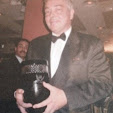
December, 2003, the full-length final cut of EAST TIMOR: BETRAYAL AND RESURRECTION won the UN Correspondents’ Association’s Ricardo Ortega Award for Excellence in
Electronic Journalism; I shared the dais with fellow UNCA Award recipients
Hans Blix, Lakhdar Brahimi, and Nicole Kidman, and former UNSG Kofi Annan
presented the award. That was a proud moment; my competition for the award had
included producers from the BBC, CNN and other major global networks. I had
become part of the Digital Revolution in Documentary, and I decided to dedicate
myself to the cause.
In
2005, I was invited to return to Timor Leste by Prime Minister Xanana
Gusmao and President Jose Ramos Horta
to do a documentary sequel on the
economic development of the country; my wife and I sold our house outside of
New York, and I bought a Sony Z-1 camera and a customized Apple Powerbook for
editing on location. We set up a production office with an editing suite in
Thailand in 2006, and made preparations to go to Timor Leste. Then we learned
that President Ramos Horta had been shot and seriously wounded in
post-electoral violence, and we had to put our plans on hold.
One
year later, I received an offer from the United Nations Mission to the
Democratic Republic in the Congo (MONUC) to become Chief of their Video Unit. I
accepted, and found a very talented international staff of 10, equipped with
the latest Sony HD cameras and several state-of-art editing suites. The job was
a dream come true, and I found the Congo a fascinating and very complex
subject.
Over
the next 5 years, we produced some memorable long form documentaries for an
international audience, as well as over 200 weekly video magazines shown across
the Democratic Republic of the Congo. My
five years working in the Congo have only served to strengthen my belief in
Digital Multimedia as a medium with enormous potential for enabling low budget
but high quality multimedia expression for people around the world.
This
is a profound change, with massive socio-economic implications which extend far
beyond the world of communications media – implications which are now being
felt around the world in phenomena like the Arab Spring. Indeed, many observers
have suggested that social media played an important role as
communications tools in the revolt.
Meanwhile,
other social scientists and media critics have asserted that the impact of
digital media transcends even cognitive functions; these social scientists
today are asserting that the first generation which has grown up with access to
digital technology seems to be significantly different than preceding
generations, and that their brains actually function differently than those of
preceding generations. As American educator Mark Prensky puts it, “Our students have changed radically.
Today’s students are no longer the people our educational system was designed
to teach.”
In
other words, there is a major generation gap in the works that educators and
other professionals are now striving to define. Prensky calls those who have
grown up with digital technology Digital
Natives, and those of us born earlier Digital
Immigrants.
Dr. Gary Small, who has been conducting research
into the neurological effects of internet , goes even farther, asserting that a phsyiological brain
gap has been created by use of digital technology, and that this gap is
increasing day by day.
The
results of this transformation are still under study; however, most pundits
seem to agree that Digital Natives have
short attention spans, read fewer books and newspapers, and have a tendency to
ignore historical precedents.
These
tendencies they attribute to what some have called information overload, or information
glut; there is simply too much information to process which is assaulting our senses in the
present, and reflection therefore becomes impossible.
Digital Natives are frequently in a state of continuous partial attention, or what Dr. Gary Small terms a digital fog.
In
terms of documentary, this means there is a major disconnect in progress among
Digital Natives with the tradition of analog cinema, in general; just as it is
difficult for today’s educators to get students to read books, it is difficult
to get today’s students to watch old films – particularly black and white, not
to mention silent films. However, speaking as a Digital Immigrant, it has been
my happy experience as an educator that all is not yet lost; once the initial
threshold of resistance is passed, contemporary students can appreciate
cinematic quality of all kinds, no matter how old it is.
It
has also been my experience that the same is true of supposedly less
sophisticated audiences in the developing world; audiences everywhere still
respond to quality, and, contrary to
the view of some communicators, it is not necessary to “dumb down” communications products for anyone – be they Digital Natives or citizens of the
developing world.
As
shall be seen, documentarians, with few vested interests to protect, and being
generally radical by nature, have enthusiastically embraced digital technology,
and – unlike many of their corporate and political sponsors - are now in the
vanguard of exploring the possibilities of this new age of human development.
Indeed, the documentary genre is in the midst of something of a renaissance. We
should all try to profit from their combined experience and their examples.
As
shall also be seen, digital documentary, being
significantly less expensive and easier to use than its analog predecessor, is
making documentary far more democratic and international than it ever was
during the analog era. While this might seem a utopian ideal, the potential
implications of this change are profound.
As
noted previously, analog cinema was never a particularly democratic form of
communication. As American cinema
historian James Monaco writes:” Film has
changed the way we perceive the world, and therefore how we operate in it. Yet,
while the existence of film may be revolutionary, the practice of it most often
has not been. Because the channels of distribution have been limited, because
costs have prohibited access to film production to all but the wealthiest, the
medium has been subject to strict control.
One
of the buzzwords in developmental planning circles in the past decade has been capacity building; this means passing on
technological skills to developing countries so they can become self-reliant
and independent. In the world of
communications media, as noted previously, the cost of using analog film, audio
and television technology has been a major stumbling block. Now, thanks to digital technology, this
stumbling block has disappeared – a development I witnessed first hand in the
Democratic Republic of the Congo, where I saw the phenomenon of Radio Okapi,
which is easily the most successful example of developmental communications
capacity building in the world.
The
result of a joint effort by the United Nations and the Swiss foundation Fondation Hirondelle, Radio Okapi was
created in 2002 to provide a reliable source of national information in a
country devastated by war. Today, a little over 10 years later, with a staff of
200 reporting from around the DRC, Radio Okapi reaches over 50% of the population,
and is the most popular and trusted radio station in the country.
To
say that Radio Okapi is a remarkable success story in digital media would be a
gross understatement; personally, I would have liked to emulate the Okapi
capacity building model in digital video production, but this activity lay
outside our mission mandate, and probably would have been blocked by our
partners in the Congolese government, who already had periodic conflicts with
Radio Okapi reporting on sensitive issues. Freedom of expression comes at a
price in the DRC; three different Radio Okapi journalists have been murdered
under very suspicious circumstances.
I am convinced that Radio Okapi is only the
beginning, and that developing countries around the world will soon develop
their own brands of digital media for domestic consumption. The bottom line is
that the advent of Digital Documentary means
that people around the world can, for
the first time, visually document and
share stories about their realities with their peers virtually everywhere. This
is a radical change. In this respect,
the state of digital documentary is but a microcosm of the larger world of
multimedia; to echo the words of many a pundit, we find ourselves at a
watershed moment in human development, a moment at which we suddenly have
access to tools and capacities we could only have dreamt of a few years ago. Our ability to harness these tools in a
positive way will be greatly dependent upon our grasp of the many implications
of their use.
In
this context, I would like to
acknowledge an inspirational debt to Professor Gene Sharp; written in 1996 as a
blueprint for democratic change in Burma, his
best known book “ From
Dictatorship to Democracy – A Conceptual Framework for Liberation”, along
with his other works, has played a major, albeit somewhat
underpublicized, role in non-violent democratic movements around the world from
Eastern Europe to Burma.
Professor
Sharp’s work affirms the power of universal democratic ideals , and , in
addition to providing practical scenarios for positive, non-violent change,
also give one cause for both optimism and hope regarding the future of mankind.
If
this thesis can follow in that illustrious tradition, it will have achieved its
goals.
However,
I am well aware that my humble effort here is also a bit like trying to catch
lightning in a bottle; as the American cultural critic Neil Postman warned us
in 1992,“A new technology does not add or
subtract something. It changes everything.”
I.2 A Few Notes
on Terminology Employed:
Let
us attempt to put the Digital Revolution in a historical context; prior to the
millennium, analog technology was the
standard for communications industries around the world; today, a little more
than a decade later, digital technology
is the almost universal standard for these industries. While a digital copy
might appear identical to an analog original, it is inherently different; in
simple terms, analog media is linear,
and sequential, while digital media is non-linear.
These
distinctions are fundamental to understanding digital technology, which was
first mentioned in a paper written in 1936 by a brilliant British mathematician
named Alan Turing, perhaps best known for cracking the German Enigma Code in
World War II. Working with a theoretical computer model, Turing proved that a
digital computer could be “ programmed to
perform the function of any other information-processing device."
The
subject of this thesis is the new media form called Digital Documentary; one cannot properly assess the impact of this
new medium without putting it in the greater context of what is now called multimedia. Traditional academic
distinctions between analog media forms such as print, film, and even
television are not valid when transferred to multimedia.
For example, in film studies, documentary has generally been
categorized as a genre of the film
medium. What, then, is the relationship between documentary film and digital
documentary?
The
answer is that they may be aesthetic cousins, employing the same general
aesthetic conventions, and subject to but they
are fundamentally different media forms.
For
example, a digital documentary copy of a documentary film such as Robert
Flaherty’s classic Nanook of the North,
might appear to be identical, but, in reality, as this thesis shall attempt to demonstrate,
a digital documentary is as radically different from a documentary film as an
internet blog is from a traditional newspaper. The content might appear identical, but the
medium is different.
As
shall also be seen, the entire process of documentary production from
financing, research through to distribution has been dramatically changed; new
creative paradigms are rapidly evolving, as are new business models.
Indeed,
the very terminology of traditional cinema studies is in a state of flux to
keep pace with the Digital Revolution. While this problem is hardly unique to
cinema studies, the term documentary itself
has been the subject of heated debate, thus further muddying the water; this
latter debate shall be dealt with in some detail in Chapter III, Towards
an Operational Definition of Documentary.
To minimize confusion between the terms analog and digital documentary , let us from now on, call analog documentary documentary
film , and the new hybrid form, digital documentary.
The term “ Digital Film”, and variations thereof, such as “ digital
documentary film” is fundamentally incorrect; a digitized copy of a
film might seem identical to the original, but it can never be an analog
film.
Otherwise,
for general purposes, this thesis shall employ the terminology used by American
film critic and cinema scholar J. Hoberman, who makes the following distinctions
between the terms cinema, movies, motion
pictures and film: “Cinema means a form of recorded and hence repeatable
moving image and, for the most part, synchronized recorded sound. Television
kinescopes and TV since videotape are cinematic; so is YouTube. The terms
motion pictures or movies imply a projected image; film refers to movies that
are produced on or projected as celluloid (or its derivatives) and hence have
some basis in photography.”